
As a mature student and in my second language, I recently graduated with first-class honours in Journalism. I was over the moon for such achievement, and straight away after graduation, I started applying for any job in Journalism, communication assistant, copywriter, P.R. assistant, etcetera.
I attended so many job interviews, but all the time, the result was always the same.
“Sorry, but I can hear your accent in your writing.” Or “Yes, there is the potential; however, you are not a native speaker.” I have also been asked: “Are you sure that you are willing to work?”
Soon, all my hopes to become a professional writer crashed into reality, that is; The media industry in the U.K. discriminates against non-native English speakers.
I knew it was hard to find a job in the media sector; however, I did not expect an industry that should be multicultural to be so narrow-minded.
I also applied to apprentice programmes, volunteering, and internships. The result was always the same; As soon they listened to me talk, they were unwilling to give me a chance.
Employers concentrated on my accent and being an Italian rather than looking at my portfolio.
In the beginning, women organisations were impressed with my work. When I offered my assistance, they would have taken me as long as I was not promoted on their website or, even worse, give a British girl my work name.
From my personal experience, I have found that the worst were P.R. and marketing agencies. Now, I am not saying that everyone out there is no genuine employer. However, seemed suspicious to me that attending two job interviews per day, and no one, I mean no one, saw me as a valuable employee?
So, why are they inviting me to all these interviews if I am not so good? Perhaps because a woman, not young, and Italian tick all the boxes, making them look good in promoting equality and diversity?
Before making any assumptions, let’s see how the Journalism environment in the U.K.
Who Journalists In The U.K. Are?
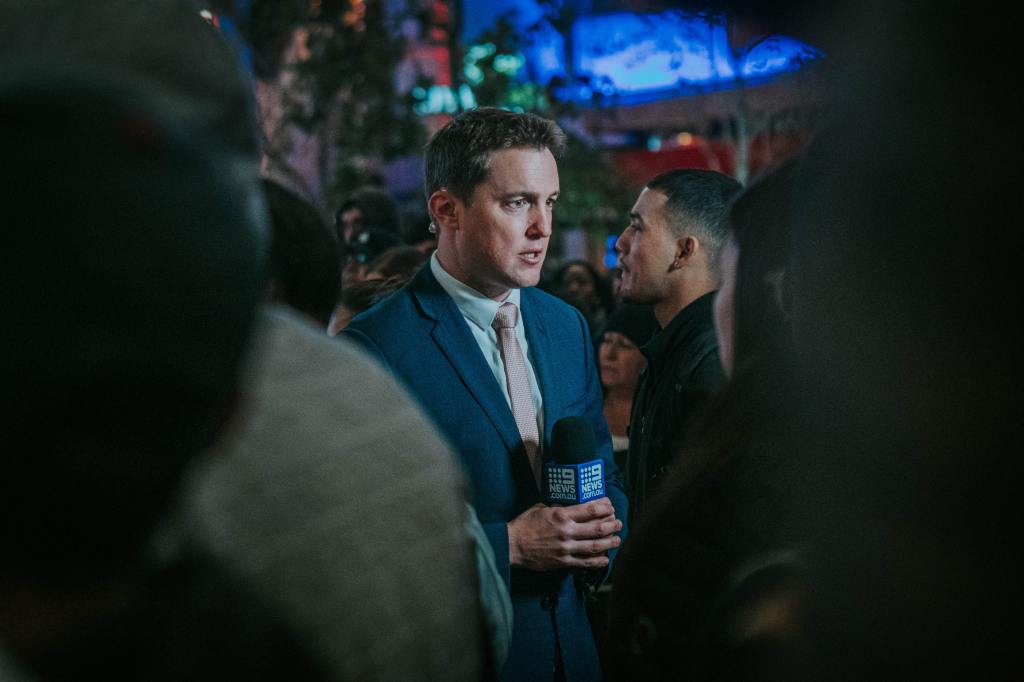
A survey carried out by the Reuters Institute Report about journalists in the U.K. shows that 45% of journalists are females, which is considered a high rate compared with other professional industries.
The gathered data reports that women are more likely to be employed part-time or freelance. Journalists employed by an organisation; have a higher proportion of women earning less than £2,401/monthly while men are more likely to earn over £4,000/monthly. However, the senior management is predominantly male.
According to the report, journalists’ political stance in the U.K. indicates that half of the journalists have left and central political views. The other half is split between the left and the centre; although right or centre, political beliefs increase with the development of responsibilities.
A very interesting figure is the diversity rate of journalism in the U.K.
The NCTJ report 2018 estimates that 90% of journalists are white.
Considering that most journalism employment comes from London, or urban centres, with significant ethnic minorities, non-white journalists are discriminated against from the industry.
U.K. Census data shows that the most underrepresented are black Britons, who are the 3% of the population; however, only 0,2% is employed in journalism.
The Asian Britons group makes 7% of the population, but just 3% are journalism. Ethnicity discrimination at work is in third place for the nature of discrimination before gender and age.
A freelance writer and financial journalist said: “I have had my fair share of bad experiences, but I won’t judge the whole industry based on a bad experience that I had.
“The industry has its fair share of the challenge as well but also have many benefits, so it works for me.”
A Muslim magazine Editor said: “I once applied for a job, and I was rejected the first time. When I used an English sound name, I had offered the job interview.”
Are Uk employers Discriminating Against Non-Native Speakers?
When I started applying for jobs straight after University, I understood that employers did not trust my skills, especially my language, even if I took A levels and a university degree in this country.
I had the feeling that I was not taken seriously. For example, during a job interview for a well-known market agency, my interviewer made fun of the books I had in my background and about my ability to read in English.
Another time, being interviewed for a social media role from a famous clothing brand, they asked me how do I correct my spelling grammar.
I have explained that as a professional writer, I work alongside an algorithm pontifying that even in my mother tongue, I would have used it because you want to deliver the best.
Obviously, they laughed and after half an hour, arrived an email, saying that I was not successful in that position, for no particular reason.
An experiment carried out by the GEMM project involved varying minorities backgrounds.
False job applicants applied for 3200 jobs, holding their skills, qualifications and work experience.
The majority group; were from Western Europe and the U.K. this group received positive responses from employers.
While for ethnic minorities having identical resumes and cover letters needed to send 60% applications more to receive as many call-backs as the majority group.
Black Caribbean, African, Indian, Pakistani and Chinese groups – experienced significant discrimination.
British employers treated minorities of European background relatively fairly; however, this was before the Brexit.
According to the GEMM report, concerns from employers were: poor English language fluency and imperfect recognition of foreign qualifications.
All minority applicants were British-born or had arrived in Britain at the age of six, with Education and training completed in Britain. This information was notified in the cover letter and CV, written without any spelling mistakes.
What Does the Law Say About Discrimination In The U.K.?
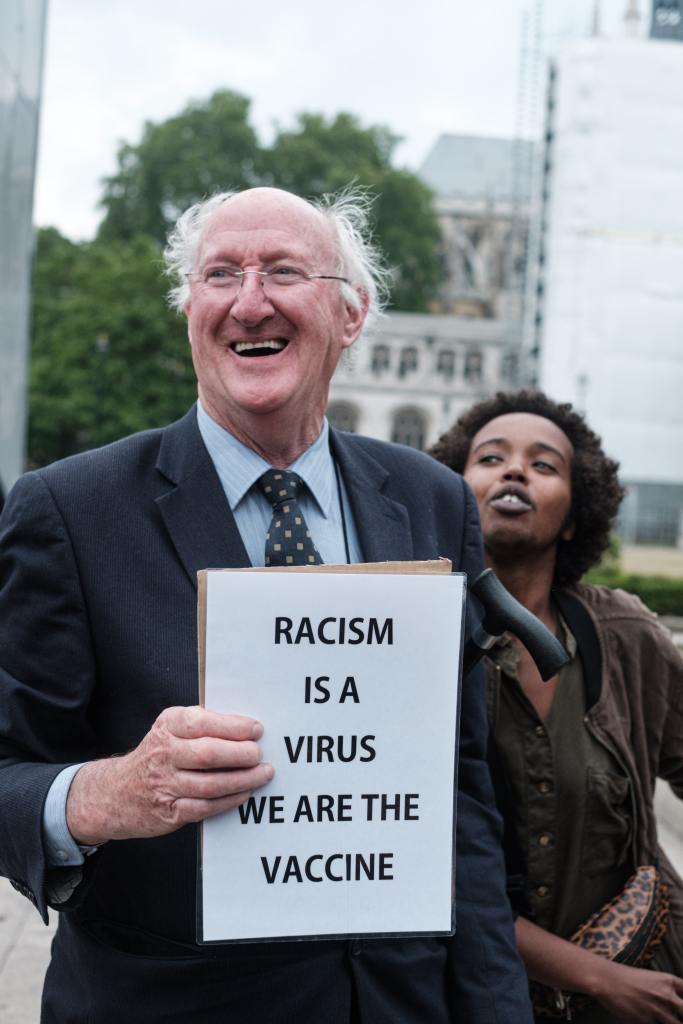
Journalists in the U.K. are protected, like other workers categories.
Equality Act 2010 protects you against any discrimination in the workplace at all stages of employment.
More information about rights and the Act can be found on EOC.
It is crucial to know your rights and protect yourself when you apply for any job or when in your workplace.
For that, the National Union of Journalists – NUJ is the voice that protects journalists.
The Union also covers freelances, P.R., writers, and anyone who works in the media sector. Join in the Union it is also beneficial for promoting diversity, tackling prejudice and under-representation of minority groups. The NUJ is not affiliated with any political party.
A spokesperson of the NUJ said: “If you are a member of the NUJ and are discriminated against as part of your work, the Union will take up your case and challenge this with the employer, taking legal action if appropriate.
“This year alone, the Union has netted more than £5.5 million for its members and the awards for damages from unfair dismissal, wages, and discrimination claims amounted to more than £1.4m.”
The NUJ supports collective action in the workplace to ensure that discriminatory practices are called out.
Subscriptions are salary-based, and lower-paid members in any sector can use the reduced contribution rate of 1% of their taxable income. This is £12.00 a month (£144 a year)/€12.60 a month (€151.20 a year)
Here is how to join the Union.


 Alessia Miceli
Leave a reply to Alessia Miceli Cancel reply