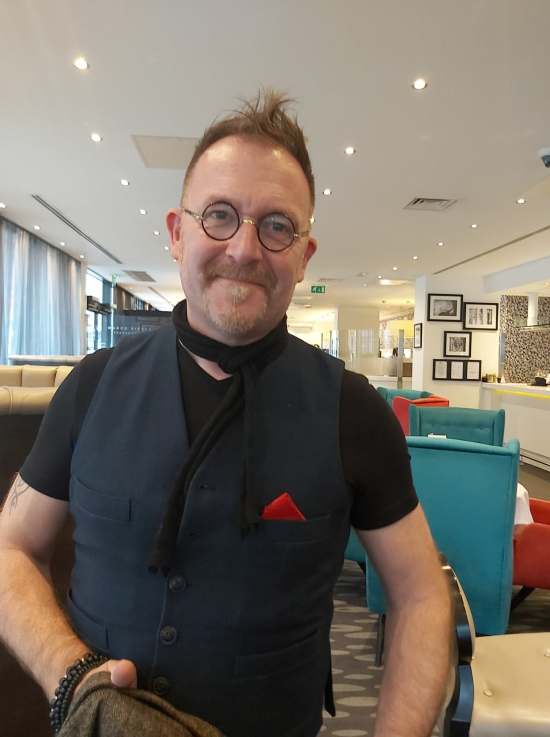
When I went to meet Michael Owen, founder at “Always wear red”sustainable and zero waste company to talk about sustainability in fashion, he makes me the first question.
” How many of your clothes do you actually wear it?” Sustainability is about oneness, and I love the oneness about things.” But let us start about some figure first
Fashion is a big business in the UK worthing £32 billion to the UK economy and 800,000 jobs.
In the UK, according to Statista report, consumers in 2018 spent an amount of 60.4 billion pounds; this amount increases every year, giving the UK position in the top five countries in Europe in term of clothing consumption.
Consumers are attracted by buying more clothes even if not needed because the retail sector is encouraging this behaviour.


Primarily due to the rise of non-specialised stores, such as supermarkets and high sales.
“We buy clothes, we get bored, and we throw them away.” Says Michael Owen.
The garment industry is the world’s third-biggest manufacturing industry generating excessive waste around the globe. Michael Owen says ” 1/3 of our clothes never reach our consumer, they get burnt by big brands and old seasons destroyed, the 70% of our clothes become buried within three years.”
Apparel producers plan to reduce emission measures and regulations to become stricter, these changes are expected in three/five years, according to the United Nations.
The elimination of coal-fired power sources will be the most crucial one, following the second-largest polluter that is textile dyeing of clean water. Polluting many rivers in India by chemical substances such as formaldehyde, chlorine, lead, and mercury. The answer should come from natural pigments. However, Phil Patterson, a consultant to textile UK-based Colour believes natural dyes are not the answer because are expensive, require larger quantities to create the same depth in colour, and need the usage of mordants.
(which include heavy metal salts) to stick to the fabric.
How can this vast industry be really sustainable safeguarding jobs, economy and markets? Michael explains his way to do sustainable fashion ” We produce in small batches to control the waste.”
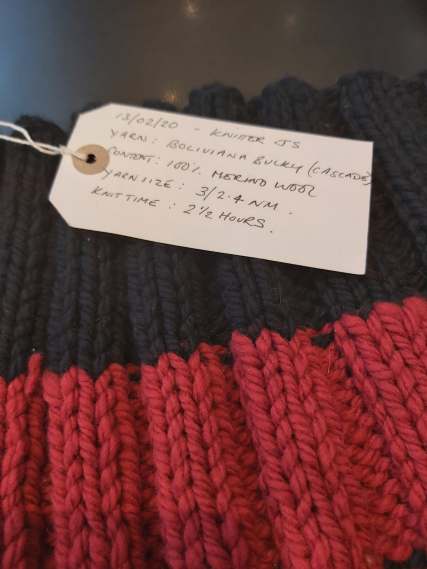
For hand, knitting the production is slow, this ensures better quality, we work only by order and every piece is numbered to deliver oneness and exclusivity.
“We only use natural materials hail from Yorkshire, except for the Merino wool, which comes from Italy. Still, we used to buy it from Australia. Also, My knitters are the best in the majority of women UK based, and I pay them the 50%more than the average. If you have the best knitters, you have the best products, so Treating people right is essential.part of our profits are devolved to men’s mental health cause.”
“We only use a digital store, we mail you, we send you photos giving you information which is the knitter and how your jumper is growing. Then we are gender-neutral, and our cardigan and jumper can fit any size.”
According to the 2018 Pulse of the fashion industry report shows that the industry has improved environmental performance in the last year. However, the industry is still far from sustainable. The problem is those fashion companies slowly put in place sustainable solutions, and the risk is to not achieve the UN sustainable development goal.
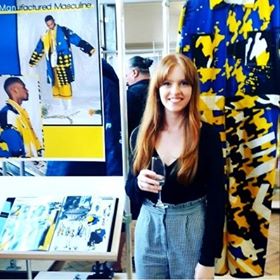
Coral Smith, the menswear fashion designer, says: “Undeniably the fast fashion industry is a massive polluter.”
” Many brands are taking steps such as reducing their packaging, making their supply chain transparent for customers and using recycled fabric blends.”
“Properly monitoring their factories to make sure fabrics are produced in a way that does not harm the environment with excessive chemicals.”
“People get joy from clothes, so the industry has no choice, needs to adapt to a sustainable future.”
“However, not in its current industry model, we know it today.”
Companies who take the change into sustainability need to follow five challenging phases- this addresses their current rank and locates themselves against their competitors.
In the pre-phase companies take an initial plan and opportunistic actions, they have not fully committed and finding the right starting point remains a challenge.
In phase one-building foundations with strong basis determined on employees, strategy and communication, improving visibility over performance and most crucial footprint
Phase two- company carries out the core efficiency program generating proof points which are environmental, social and financials.
Phase three- industry accelerate efforts, taking initiatives and target programmes into the value chain, implementing new technologies, raise profitability as well as environmental and social activities
Phase four- leaders experience the limitations of existing solutions, including regulations, business innovations, and consumers respond. Only with changes and disruptive business models can the industry move forward to the future. But scaling the new technologies will depend on leadership and cooperation across the industry, including regulators and consumers.


Bureau Veritas Uk is the National association that assist companies in their performance to meet the challenges of quality, health & safety, environmental protection and social responsibility.
Governments and policymakers are crucial in the ecosystem process; lots needs to be done. Still, the government is increasingly supportive regulations framework.
New incentives for retailers, reform taxation to reward fashion companies that deliver environmental friendly clothes. Michael Owen says: “Sustainable issue should appear in the operation of the business plan and no as a marketing strategy.”
“And new recycling technologies must be proven on a commercial scale.”
THE FUTURE? Circular Fashion
fashion products should be designed for long-life, non-toxic, biodegradable recyclable and ethically.
Produced locally and renewable, Moreover, the results should be used for as long as possible, through proper care, repair, sharing among multiple users over time (rent/lease, secondhand, swap)
The products should bring no environmental or socio-economic harm but instead contribute to the positive development and well-being of humans. Uk designers are already taking the lead on sustainable fashion, reducing costs and environmental impact but also are looking for more sustainable methods.
Making fashion circular with innovation is the solution, but how?
Many companies switch cotton to organic cotton and creating an entire collection with virgin natural materials. For example, Stella Mccartney no longer uses pure cashmere but use regenerated cashmere from factories waste in Italy.
The more innovative PET fabric production; Komodo, Thought and People Tree are all UK brands that use PET fabric already.
According to Fashion United UK, PET’s production reduces CO2 emissions by32% in comparison to regular polyester.
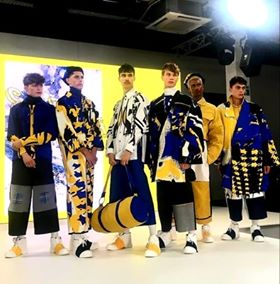
Corals Smith says: “Many fabrics are not environmentally friendly so designers could be limited in this way. On the other hand, constraints can make you more creative as designers have to think harder about how they use the materials available, which will most likely result in producing something more unique!”
Groups of innovators are studying live organism such as algae, yeast, animal cells and fungi to create an environmental friendly apparel industry.
Breaking down in non-toxic material when thrown away, unfortunately, these experiments are limited to the laboratory world due to cost competitiveness.
Are you laundry addicted?
As consumers, we must take responsibility for our actions and make a change of habits is necessary toward a sustainable future. Do we know how much pollution do we produce when we make a simple gesture like loading the washing machine?
Gary Knox sustainability director at Green earth cleaning, during a connection in a webinar, explains the damage caused by microfibres.
Up of the 64% of our clothes are made by synthetic plastic microfibres such as polyester, nylon and acrylic are cheap and adjustable. These fabrics during washes are being released into the water supply.
According to Publication Parliament UK, A single 6kg domestic wash has the potential to release as many as 700,000 fibres shedding into water.
Ingested by all marine wildlife creatures and subsequently ending up in the food chain and eaten by us. So what can we do about? Buying better quality clothes, preferring natural fabrics such as wool and organic cotton that do not need so many washes.
Considering that in the UK there are 27 million homes means that washing machine usage is 117 washes per year, per person, according to The Economist and the Office of National Statistics.


Michael Owen explains “Wool needs to be washed only twice a year and with cold water, because wool is naturally breathable which means that when you sweat the perspiration dissolve into the air, rather than getting trapped inside the fabric.”
Many fashion brands, for example, HIUTcompany, the best denim makers in the world based in rural Wales, encourage customers to try and go as much as they can without washing their jeans.
This is why fashion companies must put in place best practices to make a change toward sustainability and adhere to pulse score improvements in the fashion industry.
In the meantime, as customers, we can prefer natural fibres rather than synthetics and changing the way that we shop and treat our clothes.
Coral Smith suggests: “Consumers should try to spend more on quality items and buy less, buy second hand,
” mend clothes that break and style pieces you already have in a new way to suppress the urge to buy new things.”
” Unfortunately many are still buying clothes with a “buy now, wear once” attitude, and as long as the demand is this high brands will keep overproducing to cater for it.”
Michael Owen says: “Buy an amazing one and love that one.”


Leave a comment