Category: Project Women

  • Women’s Enterprise – Challenges, Advantages And Opportunities

    Women’s Enterprise – Challenges, Advantages And Opportunities

    In the Uk, 25% of the companies have one female founder. Women entrepreneurs contribute to our economy, 6.3% of the GVA (Gross Value Added), and their increasing importance, ranking the  North East region in 15th place for female entrepreneurs. Project Women spoke to Ellie Rees, a business woman and role model, to empower women and reveal the challenges and advantages of success.

    The UK has the highest numbers of entrepreneurs of any other country in Europe.

    Many factors contribute to such circumstance; the UK’s innovation-friendly business environment, access to SME (Small and medium-sized enterprises), training programmes for women and a high acceptance of women in business.

    Despite these and other initiatives to help women start and grow their business, only 32.37% of UK women choose to become entrepreneurs. Even if Women`s entrepreneurship is a significant economic potential that could help boost job creation – for business owners themselves and others.

    However, women are more likely to run small-size businesses based on a one-person company rather than have four and more employees.

     This can be related to the fact that women receive less funding than men entrepreneurs, even if they show 20% higher returns with 50% less investment. Yet, bear in mind that female funding is available for women entrepreneurs. You need to know where to look and how to apply; also, most of the applications can be submitted all year round, and don’t forget that a regional growth fund is also available.

    Entrepreneurship, in the North East.

    According to the British Business Bank’s Startup Loans scheme, North East has emerged as the most entrepreneurial region in the UK for women. In 2019, the number of Startup Loans issued to women in the North East was higher than in any other UK region.
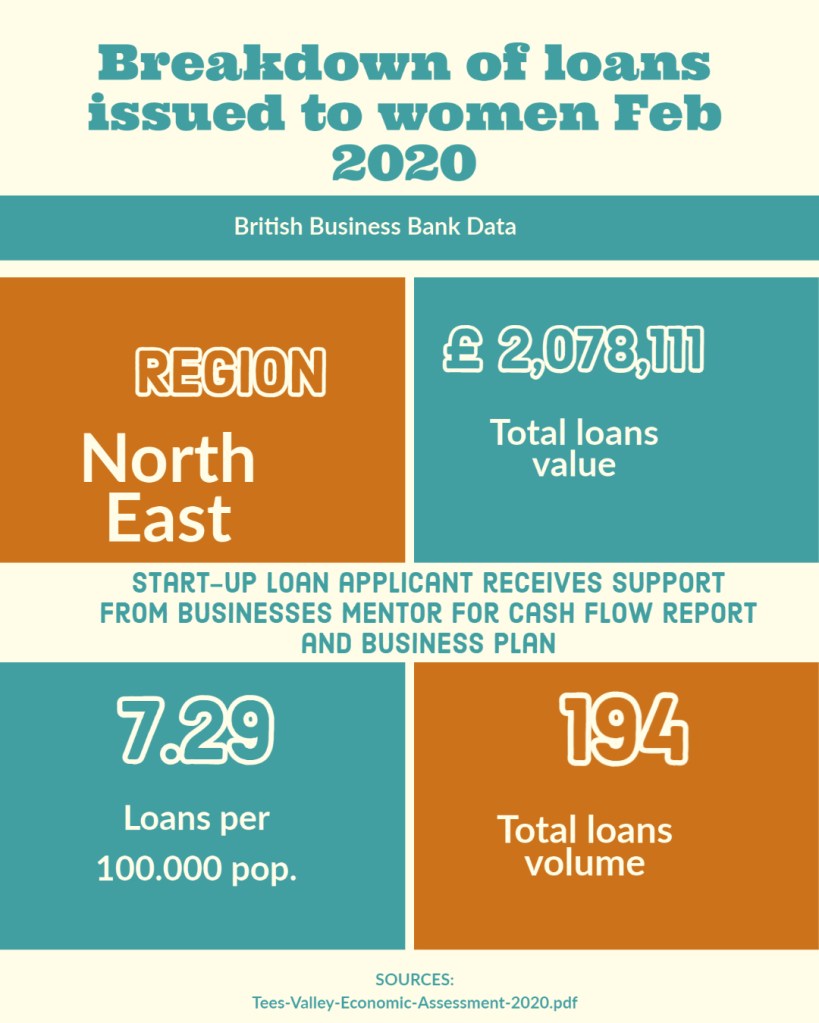
    Loans given to women enterpreurs in the North East

    The number of Start-Up Loans issued to women in the North East is proportionally higher than in any other region in the UK, in 2019, in the North East, according to the British Business Bank, was 7.29 compared with 6.63 loans in the North West and 6.35 loans issued in London.

    Ellie Rees, Teeside based entrepreneur and collabmedia&womenincollab founder, discusses her journey of being successful and giving advice to the area’s business women.
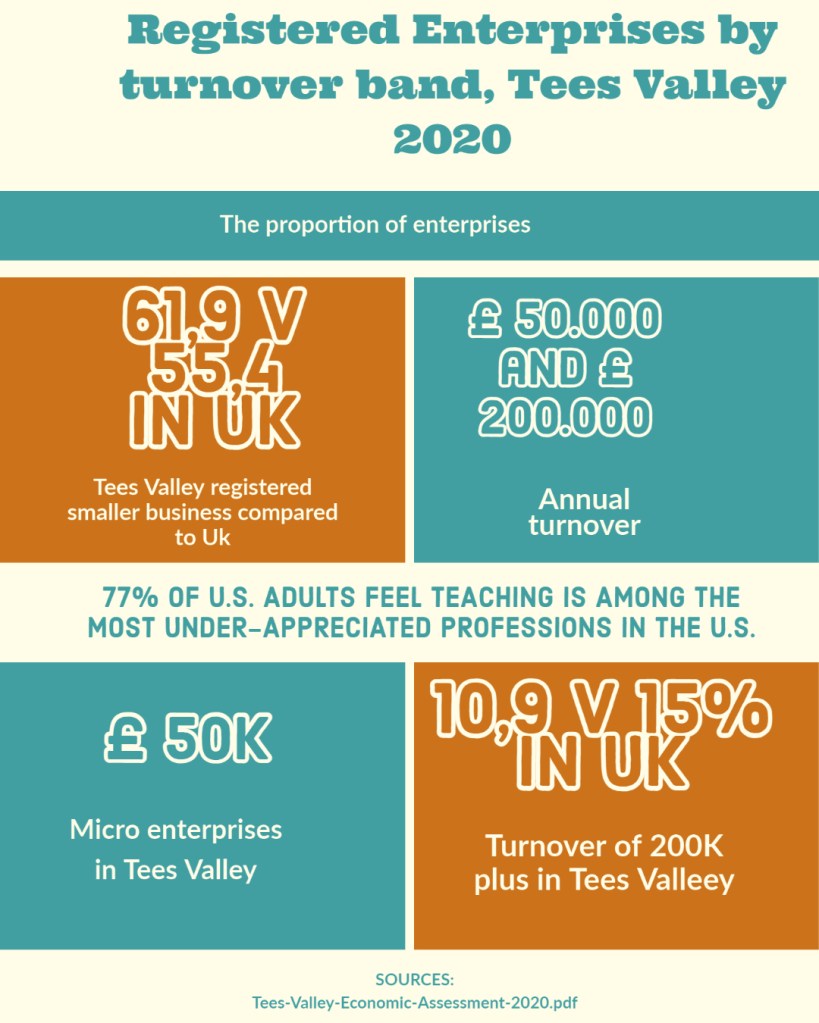
    Proportion of Business Enterprise in Tees Valley

    How did your journey begin?

    “The journey to running Collabmedia began in 2013 at The University of Central Lancashire

    “My Degree had a lot of social media focus. It was quite a difficult industry for a part-time job. Through, my degree people asked me for tips and advice on branding and managing account. It was a natural progression, and I never wanted to work with anyone else.

    “My favourite programme as a kid was Dragon Den, The Apprentice; instead of I always knew I wanted to be a business owner.

    “Collabmedia was formed through my love of Teesside and helping local business.”

    Ellie Rees Collabmedia Founder- Photo courtesy of Collabmedia

    Did you access any startup funding or programme?

    “I didn’t.

    “My business was essentially my phone and my laptop, which I had – so it was a low cost. I need an internet connection and a phone. I went into startup businesses funded courses to bring me to the next level. I did one with Teesside University, a six-month leadership management course that was a perfect one to learn about the business role’s insight and develop that side. Then, I attended a few funded courses.”

    Ellie, inspiring women at collabwomen events. – Photo courtesy of Collabmedia

    Did you find it challenging to succeed in the media environment as a young woman?

    “Oh, probably the most challenging thing to overcome. It was such a male-dominated industry, especially the digital sector. I turned up networking events with business owners for Collabmedia and people attending fairs on the other side. I think that people overlook me because I was like a formal representative of the company. I didn’t have a suit or a briefcase, and I was coming on my leather jacket and jeans. I was a young woman, but when I started talking about the industry and the views I had,  then straight away, they said; you know what you are talking about.

    “It’s frustrating that you have to overcome those barriers to proving yourself.

    “Other men in the room didn’t have to do that. But, three/four years ago networking events, did not include women, didn’t appeal to women, so that was a barrier that I had to overcome.”

    What does it mean for you, being shortlisted for Tees Businesswomen Awards in the Inspiring Others category and Digital Women Award?

    “It was a massive recognition of the work I put into it, even just be nominated in the women award alongside the category I was in. It was overwhelming, a bit of the shock and a real boost of motivation, and it was fantastic to be alongside.

    “The annual Digital Women Awards celebrates women working in and around digital doing the most incredible work in their respective industries. We welcome and celebrate women from our own digital women community and beyond! I was shortlisted for the digital women for the good award.”
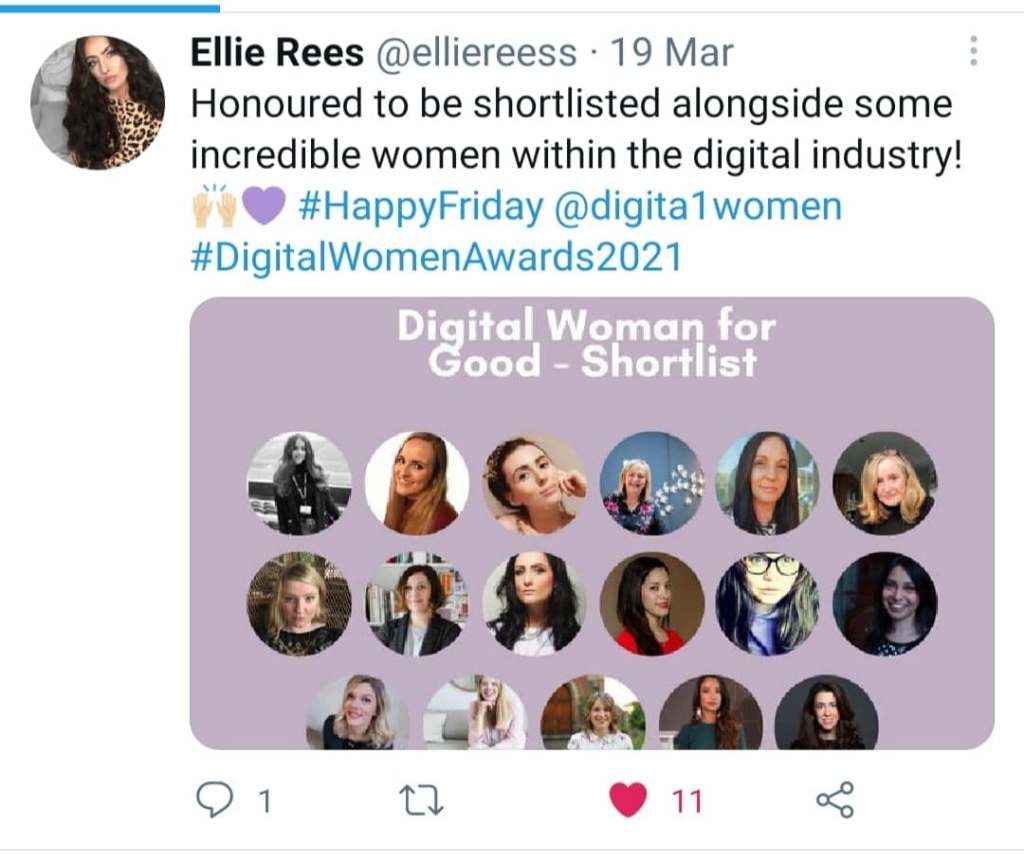
    Ellie tweet about being shortlisted in the Digital Woman for good

    What skills women entrepreneurs must have to succeed in the career?

    “Confidence! And self-promotion, many women, especially in this area, are reluctant to do self-promotion. Talk about your achievements and highlight the enthusiasm out there! Shout about yourself, use LinkedIn, use your social media to talk about your business achievements; If you are not going to fly your flag by yourself, no one else will.

     ” You know what is best for yourself and your business, and go with that. I have done it for the last seven years, and it got me so far.”

  • Fall Back In Love With Your Job

    Fall Back In Love With Your Job

    Research carried out by Jobrapido found that nearly two-thirds of the UK workforce want to change their career path. If you are a career changer, make the most to start the right programme, acquire new skills, and what you think to be the dark time, it may bring you to be bright. Project Women spoke to women who changed their career and how they made a success of it.

    Nowadays, people change their careers more often than our parents, who made a lifetime commitment to their workplace. And while you are desperate to say bye-bye to your current job, let’s face it that you are not alone. Nearly two-thirds of the UK workforce (62%) have aspirations to change their career path, according to the latest research by Jobrapido

    More than half of UK employees (52%) admitted they would readily embark on an apprenticeship or move to a different industry sector.

    The UK job market is continually evolving. New technologies and working styles transform how we view our careers and the workplace, for example, job-hopping, which has become increasingly common in the UK.

    According to the Office of National Statistics female job, changers are 6.5% compared with 2.9% for female job stayers with the highest proportion of Northern Ireland. In comparison, the country’s Eastside has the highest ratio of job changers (11.8%). While the North East had the lowest (8.3%) in 2018.

    Career changers- Photo by Ian Schneider on Unsplash

    What are the reasons for career changers?

    What are the reasons behind the decision for leaving your job and undertake a new career path? Reasons can be various, and it depends on personal circumstances, from inadequate maternity benefits to a toxic work environment.

    career addict study highlights that the most common reason for changing jobs is low pay (22.8%), followed by ‘too much stress’ (15.7%). Women are more likely to leave their job due to stress, with 17.9%, compared to 13.1% of men. Seeing the most stressful industry with Arts Culture, over 20% of people leave their jobs because of this issue.

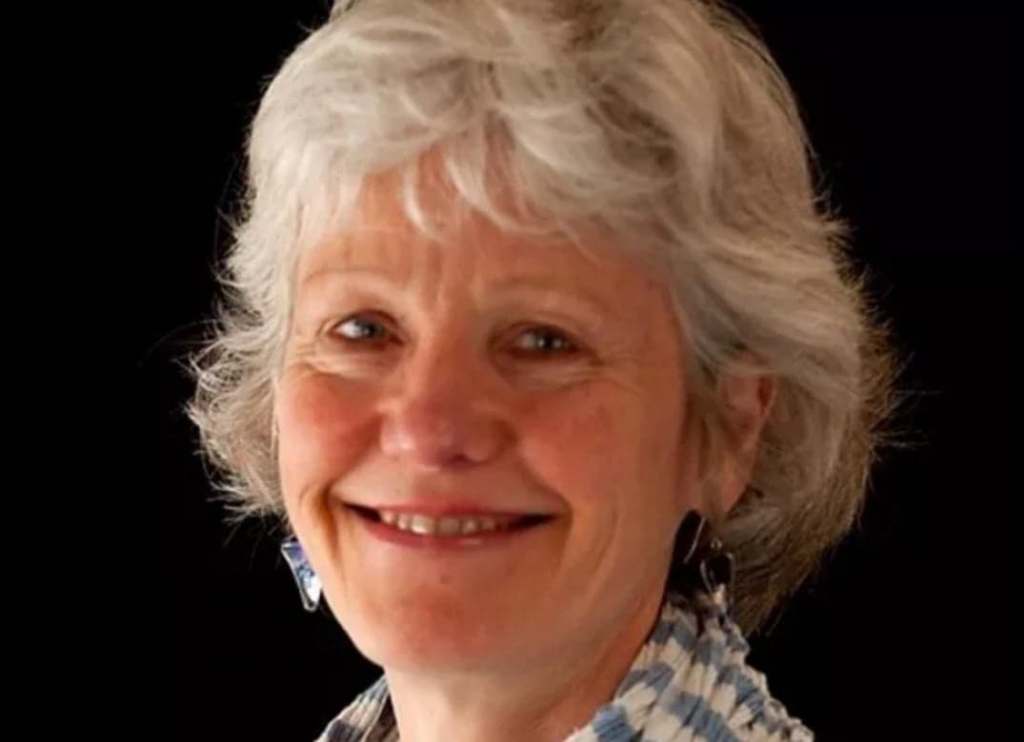
    Project Women spoke to Nikki Petty, life coach at Wired for Life Coaching; she says: “I used to work at the University of Brighton for 25 years. I ran a Doctorate program to supervise Doctorate students.

    “I had much reflected on the time, and I had counselling from University, which was very helpful. However, the combination of my health issues, my parents’ health and not enjoy work anymore, I decided that I could afford to retire. So, quite quickly, I left University.

    “When I looked what I liked doing, and in some ways what I was already doing with friends. having conversations and helping them think through where they wanted to go.”

    Nikki, today successfully runs her life coaching business, and she is qualified by Animas centre for coaching.

    Watch Nikki full story.


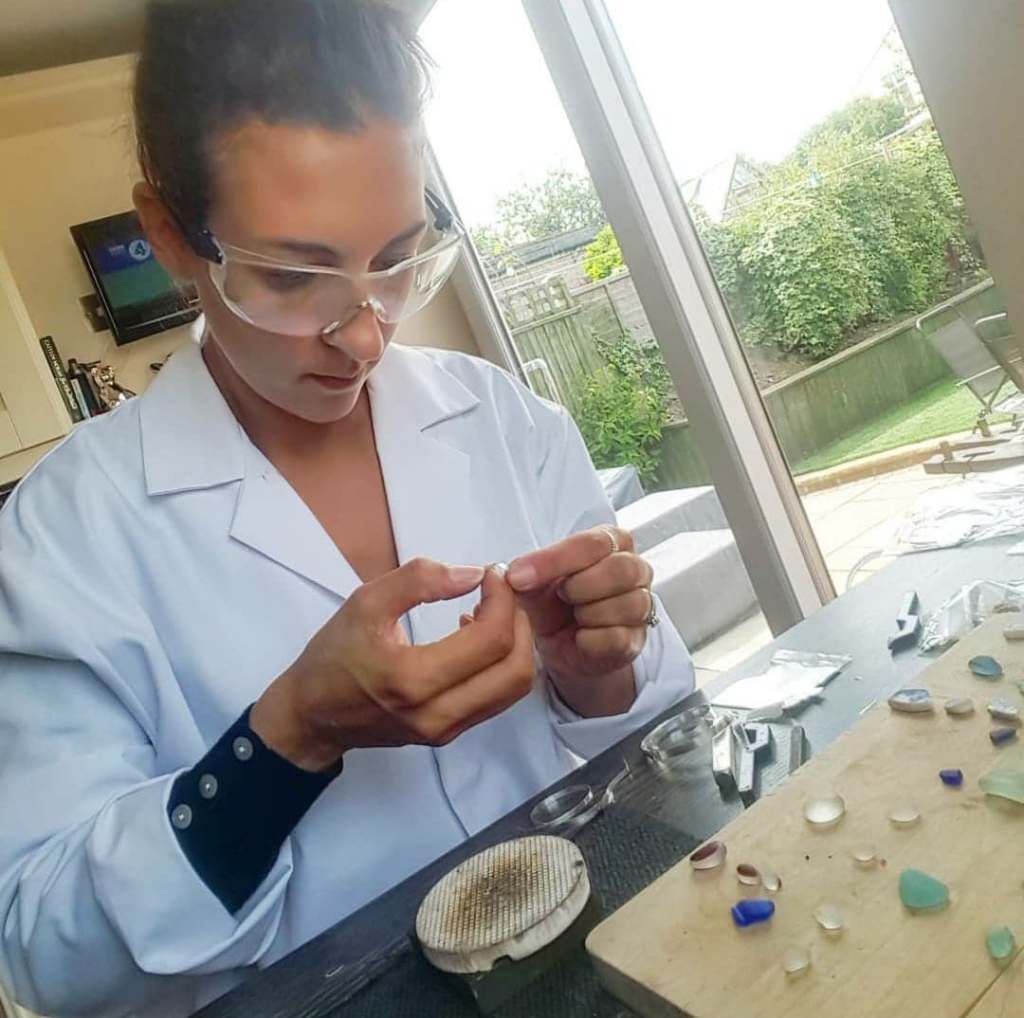
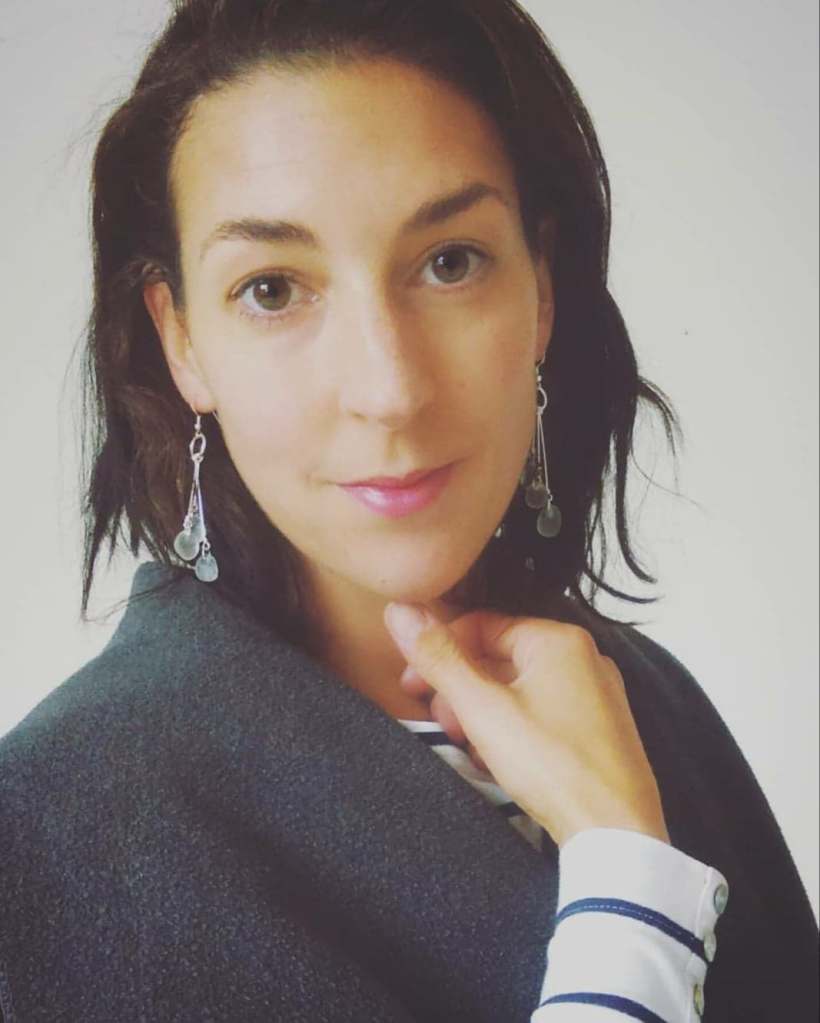
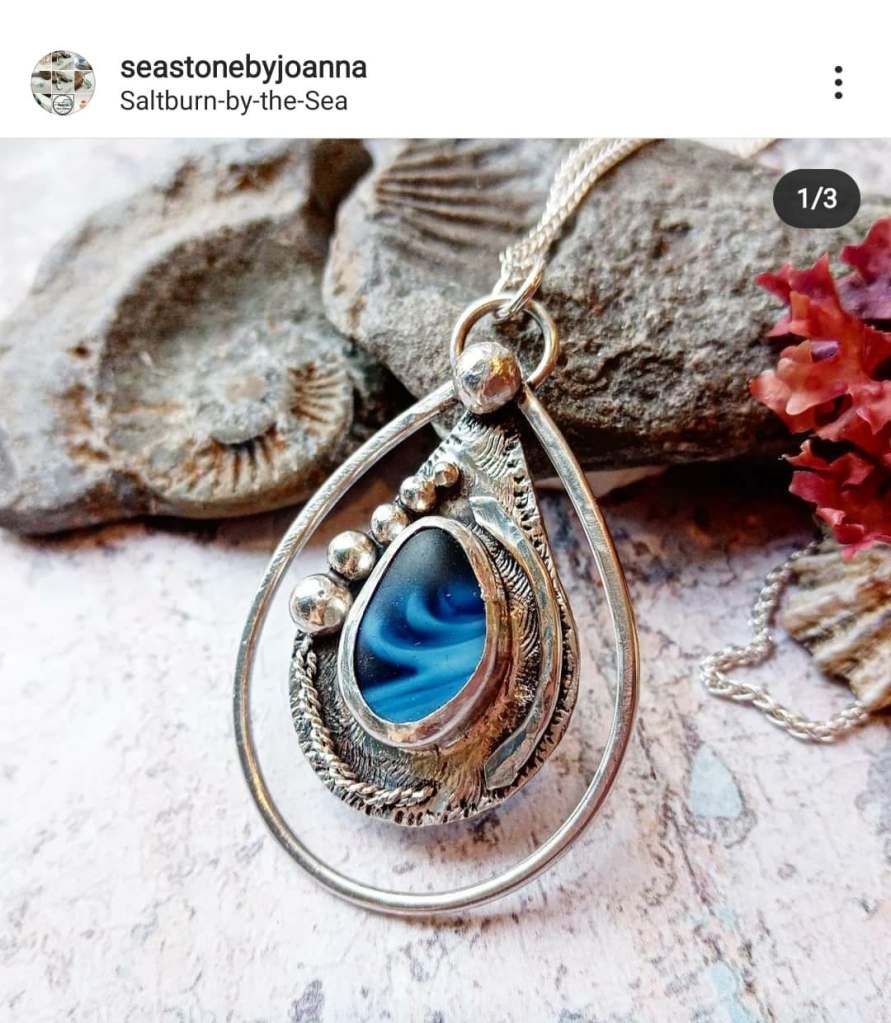
    Joanna Castor, Artisan Jeweller at Sea stone says: “I started my business career, and I progressed into a consultancy role.

    “When I became a parent with my oldest son, I found it incredibly difficult to fit together. So I jumped into the darkness and went started to apply in Sheffield to any job I could.

    “I always wanted to keep learning, to keep busy and keep developing my skills, and the benefits of that is when change comes, I have a got a bag of this to go.

    “The thing you need to know about me is I never stop. I always been very creative and been able to make stuff.

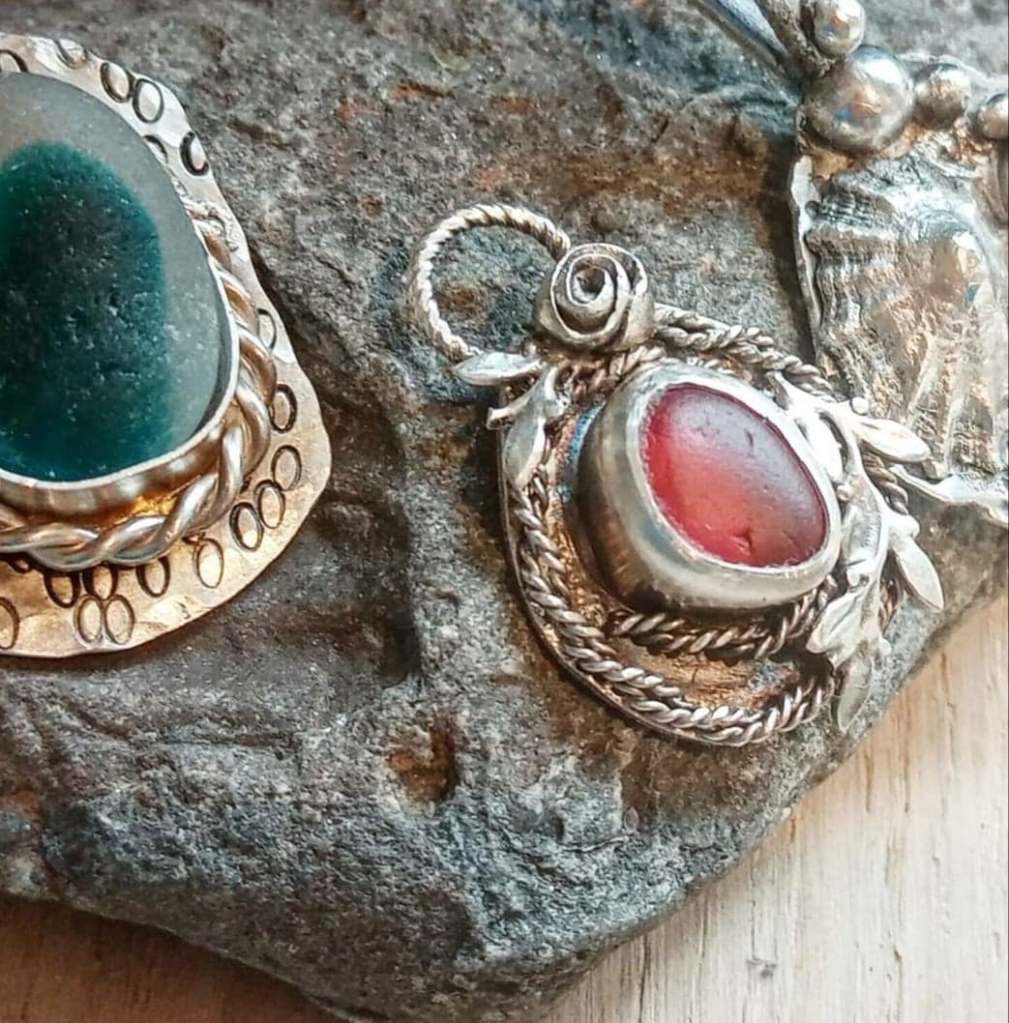
    “I was on the beach with Leo, my son, and Leo said You could do some jewellery, mum- so I took my jewellery making skills out, and I gave it a go, and it just grew exponentially.

    “I decided to convert my back garage to a studio, and in March, I will launch Seastone jewellery, which will be a higher product, which means that I can expand my business and offer in a higher range of jewellery.”

    Watch Joanna full story

    Quitting a job is a big decision; however, you have the right to feel in love with what you do, and there are professionals able to help you.

    What factors should I consider before leaving?

    Get Clear –  What do you want? Where do you want to go? Speaking with a career councillor can be helpful at this stage.

    Make a plan – Be honest with yourself, and research if your assumptions can be objective and feasible. Have an authentic look at possibilities; Job vacancies, courses, business mentoring. Consider arithmetic’s; work out your finances more precise than an accountant, then evaluate if you can afford to take this decision

    Action – Research about the industry you want to go to; what skill do I need? Do I want to enrol on a University course? Then attend open days and discuss your options course. I f you decide to run a business, then analyse your idea and develop an effective business plan.

    Quitting a job is a big decision get honest with yourself – Photo by Edgar Hernández on Unsplash

    Toward the next step

    You are READY to go toward a new chapter of your life; it is exciting.

    However, remember

     If the reason for resigning is that you are unhappy with the treatment received from a manager/employer, contact the Citizen Advice Bureau to solve the problem.

     They can give you the right advice without having to resign. If you still want to leave, the Citizen Advice Bureau can also help you out with professional notice writing; holiday entitlements and final payslip.

    The skills toolkit offer free courses to help you learn new skills, boosting your existing ones.

    If you want to enrol in further education you can also attend open days and contact Universities directly.

    Is entrepreneurship for you? The Women Organisation have the mission to empowering you and your idea through start-up support and building your skills and knowledge.

    Other helpful organisations are: National Career Advice

  • Hello, World!

    Hello, World!

    Photo by Marten Bjork on Unsplash

    Welcome to Project Women the website for ladies into career and entrepreneurship.

    I wanted to write contents for those women who, for many reasons, feel like they need to make a change in their career or for those who have an idea of a business that goes around in their head.

    Or to those who decide to go back to further education and pursue a progression in their job.

    Project Women have been speaking with many inspiring and powerful women who share advice and tell us their stories because this website aims to empower, inspire, and motivate you!

    When my ex-husband asked for the divorce, I found my self in my late thirties and without a career and updated skills. I couldn’t finish a degree in psychology by dedicating my life to become a mum and a wife. After divorce, I jumped into the dark, and I didn’t know what to do. Then I asked for an appointment with Women Aid, where I started counselling therapy; well, that was the beginning of remaking my self.

    I went back to Education; I attended college evening courses while running my business to get an access course qualification in Humanities and Social Sciences. I was determined to go to University and become a Journalist.

    When I look back, I realise how challenging it has been and how harder it was. But without the right guidance and without pushing my self I wouldn’t be here.

    This is why I created this blog to give each of you that encouragement that I had, and I hope you can find useful information to start your own business idea or to get a new chance.

    Whatever your ambitions and dreams are, I wish you to become a lady boss.

    Alessia x