The Football Association confirmed the suspension of the grassroots football league in the U.K.The Government imposed this decision during the second wave of coronavirus infections. The suspension covers matches, indoor and outdoor training for youth and adults. But what issues surround younger football players, and what are the consequences of not being active for public health and the local economy?
Over 45,000 players of all ages and 15,000 volunteers are involved in grassroots football as a public sports community in the North East. A report carried out by the Government Department for Culture, Media & Sport found that grassroots football played regularly improves general health.
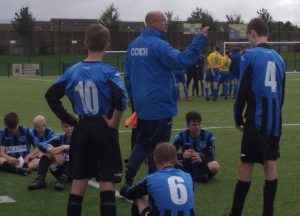
Players address a high sense of happiness and confidence compared to those who are not involved in sports. At the same time, lower-income groups of grassroots football players report better quality of life, more excellent health and high confidence levels.
The benefit of playing grassroots football produce saving costs to the NHS estimated £43.5 million per year.
They are reducing G.P. visits and reduction of medical expenses of £ 6,92 per person per year, but also a cutback of hospital appointments and a decrease in demand for social care.
Andy Clay, Football Association Development Manager, says: “I am a passionate believer that football can tackle wider issues; for example, people’s mental health.”
“It is how football can support some of the challenges the community faces, such as antisocial behaviour; we have got football taking place in the neighbourhood on Friday night, football being used for employment opportunities, and that is where football is powerful.”
“Without football being played, these opportunities are unable to happen. It is hard to tell what the impact is now; maybe we look back in five years and there is a real low in opportunities as a result of football not being played at this present moment.”

The suspension of grassroots football during this pandemic faced two lockdowns, the first one which was in March, and the last one in November, is having significant effects on young and adult players.
Not only physically but also mentally, mainly because players and coaches were not able to train in any way, as gyms were also closed.
Andy Clay, Football Association Development Manager, says: I understand that restriction was there for a reason. As F.A., we provide useful guidance on what clubs can do during this pandemic and how to remain safe for everyone. But it is difficult when you don’t play football; it is hard on mental health and physical health. For an association like ourselves, which lives for football, having that taken away was difficult.”
Colin Stromsoy, Head Coach Newton Aycliffe Senior F.C, says: “With all the football being suspended for the length it has, it is highly likely that there will be a higher number of injuries.”
“Players and coaches were not able to train in the same way they would normally, but the most significant impact was psychological.”
“With the latest announcement, at least grassroots football training can now resume.”

Figures from a state of play report found that 34% of parents in the North East represent their football club as a vital resource, especially for those families having financial difficulties, and 52% of parents fear losing their football club during the lockdown.
The economic impact of grassroots football is enormous, considering that there are a certain number of goods and services that people consume around this sport.
For example, Statista reports an average expenditure per person per year of £326 on football pitch rental, club membership and training courses, which brings into our direct economy an amount of £2050 bn per year.
The tax contribution to the U.K. exchequer is £410 million per year.
Colin Stromsoy, Head Coach Newton Aycliffe Senior F.C, says: “There is a considerable impact on the economy of the North East if you think all the people who go and play the match on Saturday, all the people who go on to support their junior teams on Sunday, buying coffees, buying drinks, snacks and food.”
“It is a huge, huge massive amount of activities that happen around the game of football itself and all the time that football is not happening, that money is not being spent.”
“The ultimate impact is on the club itself because the clubs are not able to get income from subs, which has a severe effect on their ability to survive and to carry on as community sports clubs.”
“A lot of clubs still have costs; that would be on rents, their facilities maintenance or utilities if they have to keep the buildings occupied for certain reasons, so the costs of the clubs are still there but not the income.”
“It is a serious problem for a lot of community sports clubs across the country and particularly in the northeast.”
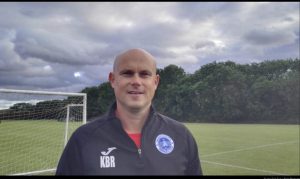
Kevin Robinson, Coach/Manager, Saltburn Athletic F.C., says: “In the first lockdown parents did not pay for subs because we did not know how long the lockdown would last. For the November one, parents decided to pay, but if the lockdown had prolonged, the club would provide the option for parents not to pay.”
“Is the only income the club has got, and we still need to do things behind the scenes.”
“With the first lockdown, no subs were coming in from March until August, which if you think that we are six teams, 15 employers, that is a lot of revenue.”
“We were not able to run any tournaments during summertime; two festivals where we get a significant amount of income from that. It is difficult to time for grassroots football clubs.”
“To be honest, grassroots football problems are not only from COVID-19. They’re less and fewer green open spaces now, compared to when I was a child.”
“Look at Saltburn, for example, other than Huntcliff where the lads can go and play?”
“The grass pitches do not have drainage; the pitch is not able to tolerate 16 pieces of training plus games.”
“The pitch gets corrupted, destroyed, games are called off, and if not called off- there are ditches on it.”
“The facilities for grassroots football are very poor in England for where English football wants to be.”